

Peppermint oil is often praised as a simple, natural way to keep pigeons away, but does it truly work, or is it just another viral home remedy? If you’re searching for a clear, fact-based answer backed by real-world experience, you’re in the right place. In this guide, you’ll discover how peppermint oil affects pigeons, what science and experts actually say, how to use it safely, and more.

How peppermint oil is believed to repel pigeons
Peppermint oil may help keep pigeons away because its strong, cooling aroma creates an environment they find unpleasant. While humans associate peppermint with freshness, pigeons tend to avoid overpowering scents.
Here’s why it might work:
- Strong aroma: The intense scent makes the area less appealing for pigeons.
- Sensory discomfort: Pigeons are sensitive to strong odors, so concentrated fragrances can discourage them from staying.
In short, peppermint oil’s powerful smell can push pigeons to look for a more comfortable, neutral-scented spot.
What science and experts say about peppermint oil for repelling pigeons
Peppermint oil may help in the short term because its strong scent can make perching areas less pleasant for pigeons. Some homeowners see temporary results when applying it frequently on cotton balls, sprays, or diffusers. However, experts note that its effectiveness is limited: pigeons can adapt quickly, and the scent fades fast outdoors.
➡️ Overall, peppermint oil can support other methods, but it isn’t strong enough to solve persistent pigeon problems on its own.
How to use peppermint oil to repel pigeons
While peppermint oil alone has limitations, applying it properly can help reduce pigeon activity in small, controlled spaces.
Method 1: Peppermint oil cotton balls

How to prepare:
Soak several cotton balls with 10–15 drops of pure peppermint essential oil. For stronger scent intensity, place the soaked cotton balls in a small bowl or shallow dish so the scent remains concentrated.
Where to apply:
Position the cotton balls in corners, window ledges, balcony rails, roof edges, and any flat surfaces pigeons frequently land on. Replace or re-soak them every 2–3 days, as the scent fades quickly outdoors.
Method 2: Peppermint oil spray

How to prepare:
Mix 15–20 drops of peppermint oil with one cup of water and one tablespoon of white vinegar to help the solution disperse better. Shake well before each use.
Where to apply:
Spray generously on entry points, siding, balcony floors, window sills, outdoor furniture, and around nesting hotspots. Reapply daily outdoors, especially after rain or strong sunlight.
Method 3: Peppermint oil diffuser

How to prepare:
Fill an outdoor-safe diffuser with water and add 8–12 drops of peppermint oil. Choose a model that can handle wind and outdoor airflow.
Where to apply:
Place the diffuser in semi-enclosed areas like covered patios, balconies with walls, pergolas, or near spots where pigeons linger. Diffusers work best in spaces where the scent can accumulate rather than dissipate immediately.
Method 4: Peppermint oil gel cups or soaked rags

How to prepare:
Create a small cup filled with a gel base (like aloe gel or petroleum jelly) and mix in 20–30 drops of peppermint oil to slow scent evaporation. Alternatively, saturate cloth strips or rags with oil.
Where to apply:
Put the cups or rags in gutters, balcony corners, roof joints, vents, and beams, or anyplace pigeons try to nest.
Method 5: Mix peppermint oil with vinegar
How to prepare:
Combine 20 drops of peppermint oil with one cup of white vinegar. Vinegar enhances the sharpness of the scent and increases the pigeon-deterrent effect.
Where to apply:
Spray or wipe this mixture along ledges, railings, outdoor walls, trash areas, and beneath overhangs. This method is particularly useful for stubborn nesting zones, but like all natural options, it requires frequent reapplication.
Pros and Cons of Using Peppermint Oil for Repelling Pigeons

While peppermint oil offers few benefits, it also comes with limitations you should be aware of to avoid disappointment.
Pros of using peppermint oil for repelling rigeons
- Natural and chemical-free, making it safe to use around children and pets when applied correctly
- Low-cost first attempt if you're exploring gentle deterrent options
- Reduces mild pigeon presence by creating an unpleasant smell in small areas
- Easy to apply with cotton balls, sprays, or diffusers
- Fresh, clean scent that also improves the smell of the treated area
- Low risk of damaging surfaces compared to harsher chemical options
Cons of using peppermint oil for repelling pigeons
- Short-lasting effect: the scent fades quickly outdoors and requires frequent reapplication
- Not strong enough for persistent or nesting pigeons, especially on balconies or open spaces
- Weather-sensitive, becoming ineffective with wind, heat, or rain
- Limited coverage area, only working in very close proximity to the scent source
- High maintenance, as cotton balls and rags must be replaced often
- No scientific proof of long-term effectiveness, making it unreliable as a standalone solution
Final verdict: Should you use peppermint oil to repel pigeons?
Peppermint oil can help in very specific situations, but it shouldn’t be your main strategy if you’re dealing with persistent pigeons. Its strong scent may discourage them briefly, but the effect fades quickly and requires constant reapplication to maintain any impact. For mild, occasional visits, it can serve as a natural extra layer of protection. However, for reliable, long-term results, especially where pigeons roost or nest, stronger and more durable deterrents are far more effective.
Alternative solutions to peppermint oil for repelling pigeons
When peppermint oil isn’t enough, it’s helpful to turn to methods that deliver stronger, longer-lasting protection.
Best Natural Alternatives to Peppermint Oil for Repelling Pigeons

These options are among the most trusted methods for anyone searching how to repel pigeons naturally:
- Vinegar spray: Its sharp scent irritates pigeons and discourages them from roosting.
- Citrus peels or oils: Pigeons dislike the strong smell of lemon, orange, and grapefruit.
- Chili pepper or cayenne mixtures: The irritant properties help keep pigeons from settling on ledges.
- Garlic or onion solutions: Their pungent odor can repel pigeons from small spaces.
- Clove oil or cinnamon oil: They offer more persistence than peppermint oil, yet their effect still fades after a while. When that happens, an ultrasonic pigeon deterrent provides the continuous pressure needed to prevent pigeons from returning.
Other deterrents that work better than peppermint oil for repelling pigeons
Reflective objects

Reflective surfaces disorient pigeons by flashing light patterns that make them uncomfortable. Wind-activated reflective deterrents create constant motion, which enhances the repelling effect. A reliable option is the SpinScarer, which uses spinning reflective panels to disrupt pigeons’ visual navigation naturally and humanely.
Fake predator decoys

Pigeons naturally avoid anything resembling a predator. Owls are one of the most effective decoy shapes because pigeons instinctively associate them with danger. For best results, choose a decoy with realistic detail like SilentOwl, and place it where pigeons typically perch.
Bird spikes

Bird spikes physically block pigeons from landing or nesting on ledges, balconies, signs, and roof edges. They’re humane, discreet, and extremely effective because they remove the possibility of perching entirely. Among the best options you can see on the market is BirdRail that offers strong weather resistance and long-term protection with minimal maintenance.
Motion-activated sprinklers

These devices detect movement and release a quick burst of water that startles pigeons without harming them. They’re particularly effective in gardens, yards, and larger outdoor areas where pigeons frequently roam. A reliable system like JetSentinel ensures consistent, automated protection that conditions pigeons to avoid the area altogether.
Ultrasonic pigeon repellent
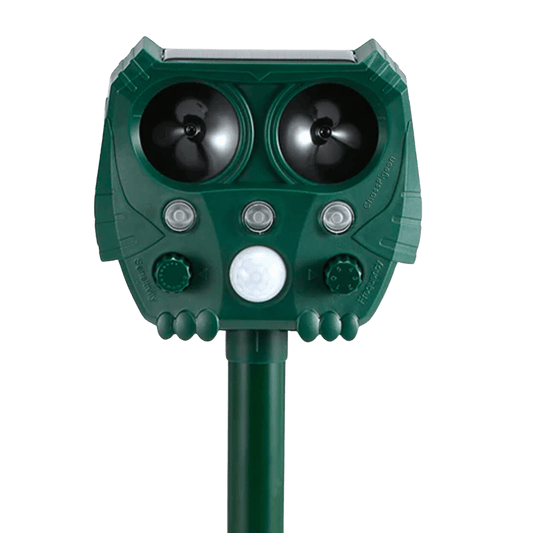
Ultrasonic devices emit high-frequency sound waves that pigeons find uncomfortable, encouraging them to move away from the protected zone. Unlike scents, ultrasonic protection is continuous and does not fade over time. The PigeonChaser is one of the best choices, thanks to its wide coverage and adjustable frequency settings.

For those who prefer a more discreet option, the ZeroBird provides long-term effectiveness with virtually no maintenance needed.
Comparison Table: Peppermint Oil vs. Other Pigeon Repellent Methods
This comparison table outlines how peppermint oil stacks up against other popular pigeon-repellent methods, evaluating their effectiveness, maintenance needs, safety, durability, and ideal use cases to help you choose the most suitable solution for your situation.
|
Criteria |
Peppermint Oil |
Reflective Objects |
Bird Spikes |
Ultrasonic Pigeon Repellents |
Motion-Activated Sprinklers |
|
Effectiveness |
Mild and temporary; works only at close range |
Moderate; disrupts pigeon vision and comfort |
High; physically blocks landing |
High; covers large areas with constant sound pressure |
Very high; startles pigeons instantly |
|
Maintenance |
Frequent reapplication needed (daily in hot weather) |
Low; may need repositioning |
Very low; long-term solution |
Low; occasional cleaning |
Medium; requires checking water levels |
|
Safety |
Safe but scent may bother sensitive individuals |
Safe and humane |
Safe and humane |
Safe for humans and pets |
Safe; uses only water |
|
Durability / Weather Resistance |
Low; scent fades quickly outdoors |
High; weather-resistant |
Very high; built for long-term exposure |
High; designed for outdoor use |
High but dependent on water pressure |
|
Main Drawbacks |
Short lifespan, inconsistent results, weather-sensitive |
Pigeons may adapt over time |
Must be installed properly to work |
Some birds may take a few days to respond |
Requires hose access or refill |
|
Best Use Case |
Small balconies needing temporary relief |
Balconies, railings, window sills |
Persistent roosting areas |
Large balconies, roofs, persistent pigeon invasions |
Gardens, yards, wide open spaces |
FAQ
Is peppermint oil dangerous for pigeons?
Peppermint oil is not considered toxic to pigeons, but its strong aroma can irritate their senses and make an area less appealing. It doesn’t harm them physically. Its role is simply to create discomfort so they avoid the treated spots. Always apply it in moderation to prevent overwhelming scents for pets or humans sharing the same space.
What concentration of peppermint oil works best for repelling pigeons?
A 100% pure peppermint essential oil diluted to a 10–20% solution is generally strong enough to create a noticeable scent barrier. Lower concentrations tend to fade quickly outdoors. Using undiluted oil on cotton balls, gel cups, or rags is also effective, especially in sheltered areas where wind won’t disperse the smell too fast.
What’s the best way to apply peppermint oil for repelling pigeons?
The most effective methods are using cotton balls soaked in pure peppermint oil or applying a high-strength spray directly to ledges, beams, balcony corners, or nesting spots. Reapply frequently since the scent fades quickly outdoors. Combining a strong application method with good placement is key to getting any real repellent effect.
How long can peppermint oil repel pigeons?
Peppermint oil typically lasts only a few hours to a couple of days outdoors, depending on wind and weather. Because of this short duration, it requires frequent reapplication. For longer-lasting protection, many homeowners use continuous deterrents like an ultrasonic pigeon repellent, which provides stable coverage without needing constant maintenance.
Does peppermint oil effectively prevent pigeons from nesting?
Peppermint oil may discourage pigeons from settling temporarily, but it rarely prevents nesting in the long term. Pigeons adapt quickly to scents, and once the aroma fades, they often return. For nesting prevention, it’s more reliable to combine peppermint oil with physical barriers like bird spikes or motion-based deterrents like a motion-activated sprinkler.
Does peppermint oil repel multiple bird species or only pigeons?
Peppermint oil can bother various birds due to its intense smell, but its effectiveness varies. Some species ignore it entirely, and even pigeons may adapt after repeated exposure. It is not a universal bird repellent, and results are inconsistent across different environments and species.
Peppermint oil vs vinegar: which works best for repelling pigeons?
Both can offer mild, temporary effects, but neither is highly reliable. Peppermint oil creates a strong scent barrier while vinegar relies on its acidic odor; however, testing shows limited long-term impact for both. Many homeowners ask does vinegar repel pigeons, but like peppermint oil, its effects fade quickly and require frequent reapplication.