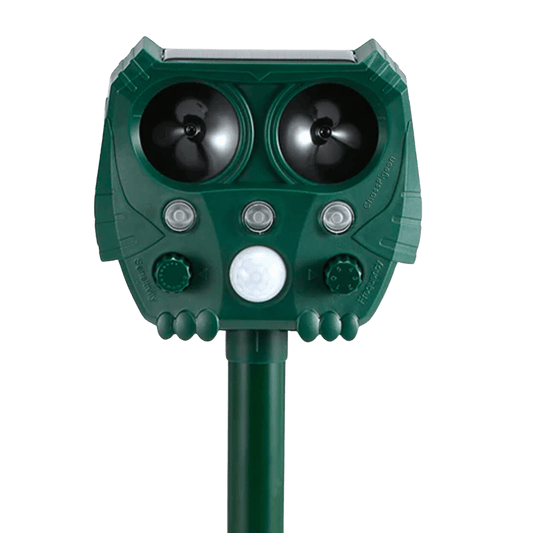


If you have moles tunneling through your lawn, you have probably come across those devices that promise to drive them away with ultrasound. They are everywhere online, and they sound almost too good to be true. So do ultrasonic mole repellers actually work, or are they just clever marketing? Let's dig into the truth.
Done with moles destroying your yard? MoleVox makes them disappear. Discover it here.

What Are Ultrasonic Mole Repellers?

Before deciding whether these devices actually work, it helps to understand what they are and how they're supposed to keep moles away.
How Ultrasonic Mole Repellers Are Supposed to Work
An ultrasonic mole repeller is a device you push into the ground, usually with a stake or spike, so it sits buried with just the top poking above the surface. Once it's on, it sends out high-frequency sound waves and vibrations. The idea is pretty simple. Moles depend a lot on their hearing and are very sensitive to ground movement, since they spend their lives in dark tunnels where eyesight doesn't count for much. The device is meant to flood their space with annoying pulses that feel unpleasant or threatening. In theory, the constant buzzing makes moles think the area isn't safe, pushing them to move somewhere quieter.
Types of Ultrasonic Mole Repellers
Not all of these gadgets are built the same way, and knowing the differences can help you understand what you are actually buying. The most common options on the market include:
- Battery-powered repellers, which run on standard batteries you replace every few months.
- Solar-powered repellers, which charge through a small panel on top and need plenty of sunlight to stay active.
- Mains-powered repellers, which plug into an electrical outlet and tend to offer stronger, more consistent output.
- Combination models that use ultrasonic pulses along with flashing lights or stronger vibrations, which makes them tougher for moles to shrug off.
What Scientific Studies and Experts Say About Ultrasonic Mole Repellers

What science shows
- In a peer-reviewed paper from the 10th Wildlife Damage Management Conference (Devices for Vertebrate Pest Control: Are They of Value?, Witmer, 2003), researchers looked at ultrasonic and vibration repellers meant for pocket gophers, moles, and other burrowing animals. After reviewing the available lab and field data, they found little solid evidence supporting the manufacturers' claims about the efficacy of these devices.
- According to research in Current Biology (Catania, 2019), moles' brains are wired to pick up vibrations rather than airborne sound, since normal hearing doesn't help much underground where soil muffles everything.

Expert opinions on ultrasonic mole repellers
Wildlife specialists tend to stay cautious about the effectiveness of the ultrasonic mole repellers. Dr. Robert Timm of the University of California Cooperative Extension has stated plainly that researchers have found no scientific evidence that ultrasonic devices repel pocket gophers or other burrowing rodents like moles.
What Homeowners Report
Opinions among homeowners are mixed. Some notice fewer tunnels early on and swear the device is working. Others see no difference. A pattern keeps showing up too. Even when they work at first, the results tend to wear off as moles adjust. In the end, what people are seeing on the ground matches what the science tells us.
Factors That Influence Ultrasonic Mole Repellers Effectiveness
If two people get completely different results from the same device, the reason usually lies in a handful of conditions. Get these right, and you give the repeller its best possible chance to work.
Soil type and ground conditions

Soil decides how far the pulses travel. Moist, loose soil carries vibrations well and helps the signal spread. Dry, sandy, or rocky ground absorbs that energy fast, shrinking the effective range to just a few feet. This is why the same device can feel powerful in one garden and useless in another. Before blaming the product, look down at what type of soil you are working with.
Yard size and device coverage

One stake rarely protects a whole lawn. Each unit covers a small radius, often far less than the box promises. If you spread a single device across a large yard, moles simply move to the quiet zones beyond its reach. Matching the number of units to your actual space is essential. Think in terms of coverage and place several units across the area.
Got a big yard? No problem. MoleVox covers up to 7,500 sq ft, keeping moles away from your home.
Severity of the mole infestation

These devices are more of a supporting act than a headliner. If only one or two moles are passing through, the pulses may convince them to leave. But a heavy, established infestation with deep tunnels and plenty of food is far harder to budge. The more settled the moles are, the less likely sound alone will move them out.
Placement

Where you put the device matters as much as which one you buy. Push it into active tunnels or runways, not random spots, so the vibrations reach moles where they actually travel. Keep it fully seated in the soil for good contact, and reposition it as activity shifts. Poor placement is one of the most common reasons these devices seem to fail.
Pros and Cons of Ultrasonic Mole Repellers
Like any pest solution, these devices come with real strengths and honest limitations. Weighing both sides helps you decide whether they fit your situation or not.
✅ Pros
- Humane and non-lethal: they aim to repel moles rather than kill them, which suits gardeners who prefer a kinder approach.
- Chemical-free and safe: no poisons or toxins near your plants, soil, kids, or pets.
- Easy to install: simply push them into the ground and switch on, with no special skills needed.
- Low maintenance: solar models in particular run on their own with little ongoing effort.
- Affordable to try: most units are budget-friendly, making them an easy first thing to try.
❌ Cons
- Inconsistent results: they work for some yards and do nothing for others, as the research and reviews confirm.
- Limited range: dense soil shrinks coverage to a few feet, far less than many labels claim.
- Moles can adapt: animals often grow used to the pulses, so effectiveness may fade over time.
- Not for big infestations: settled, heavy mole activity rarely responds to sound alone.
- Battery and weather issues: power can run down, and cheaper models may not hold up well outdoors over time.
Ultrasonic Mole Repellers vs Other Mole Control Methods
Ultrasonic devices aren't the only option for repelling moles. To get a fair picture, it helps to see how they compare to the other methods people commonly use.
Vibration mole repeller

This is where the science actually points. Since a mole's brain reacts far more to ground vibration than to airborne sound, a device built around seismic pulses speaks the animal's real language. That is exactly the thinking behind MoleVox. It’s a vibration mole repeller, designed to send seismic waves through the soil and signal moles that a threat is near. It stays humane and chemical-free, yet targets the sense moles truly rely on. For homeowners wanting a kinder first line of defense that respects how moles perceive their world, this is the smarter version of the concept.
Mole traps

Traps are the method professionals trust most for fast, certain results. These are :
- Highly effective when set correctly in active tunnels.
- Permanent, since they remove the mole directly rather than nudging it elsewhere.
- Hands-on, requiring some skill, effort, and a stronger stomach.
Poison baits

Baits promise quick kills but carry real drawbacks. They introduce toxins into your soil, pose a danger to pets, children, and wildlife, and often miss their target since moles prefer live worms over manufactured pellets. For most home gardens, the risks tend to outweigh the convenience.
Natural remedies

These gentle options appeal to eco-minded homeowners, with mixed but sometimes useful results.
- Castor oil, the most evidence-backed of the group, makes soil and worms unpleasant for moles.
- Plant barriers like daffodils or marigolds, which some find mildly discouraging for moles.
- Habitat changes, such as reducing grubs and worms to remove the food supply.
These remedies tend to work best as a gentle support rather than a complete fix, which is why many gardeners pair them with a vibration mole repellent. The natural deterrents make your yard less inviting, while the seismic pulses give moles a steady reason to move on, and together they cover each other's weak spots nicely.
Our Final Verdict: Are Ultrasonic Mole Repellers Worth Trying?
➡️ Short answer? Maybe, but only with the right expectations.
Sound alone won't shift a settled colony, and the science backs that up. Yet as a humane, chemical-free, low-cost first move against a mole or two that just showed up, they earn their spot. Give them their best shot: moist soil, a modest yard, enough units, and placement in active tunnels. Better still, pick a model that works with mole biology by sending vibrations through the ground, like our MoleVox, rather than just buzzing away. Facing a heavy infestation? Be realistic. Pair any repeller with habitat management, or move up to trapping. Treat these devices as one smart piece of the puzzle, not the whole answer, and they are genuinely worth a try.
Ready to try the smarter, science-backed approach? Meet MoleVox.
FAQ
Do moles hear ultrasonic sound?
Not really, at least not the way the marketing implies. Moles have poor hearing and live in a world built on touch and vibration. Their brains respond far more to tremors in the soil than to airborne tones. So a device that simply emits sound does little, while a vibration mole repellent that sends physical pulses through the ground is far more likely to get their attention.
Are ultrasonic mole repellers safe for pets and dogs?
For the most part, yes. These devices are non-toxic and chemical-free, with no poisons that could harm a curious dog or cat digging in the yard. Some pets may briefly notice higher-frequency models, though most ignore them entirely. Compared to baits and poisons, ultrasonic repellents are one of the safer options for homes with animals and children around.
Do ultrasonic mole repellers work on voles and gophers too?
They are often marketed for all three, and the results stay just as mixed. Voles and gophers are also burrowing animals that rely on vibration, so the same logic applies. Still, like with moles, you should expect a helpful nudge rather than a guaranteed eviction.
How to choose an ultrasonic mole repeller if you still want to try one?
When choosing an ultrasonic mole repeller, focus on what the science actually rewards. The best choice sends vibrations through the soil rather than sound alone, and varies its pulse intervals so moles cannot grow used to a predictable rhythm. It should be well built and waterproof, since it lives all year outdoors, and come in enough units to cover your yard without leaving any gaps.
Do solar ultrasonic mole repellents work better than battery-powered ones?
Neither is automatically stronger, but solar models win on convenience. They need no battery swaps and run on their own, as long as they get enough sunlight. Battery units can deliver steady output in shaded spots, yet they fade as power drops, often without warning. For most gardens, a reliable solar unit in a sunny position is the easier long-term choice.
When are ultrasonic mole repellers usually not enough?
When the problem is big or well established. Deep tunnels, several moles, and a yard full of worms give the animals little reason to leave. Dry, sandy, or rocky soil also weakens the signal badly. In these cases, sound and vibration alone rarely win, and pairing them with trapping or habitat changes becomes the smarter path forward.