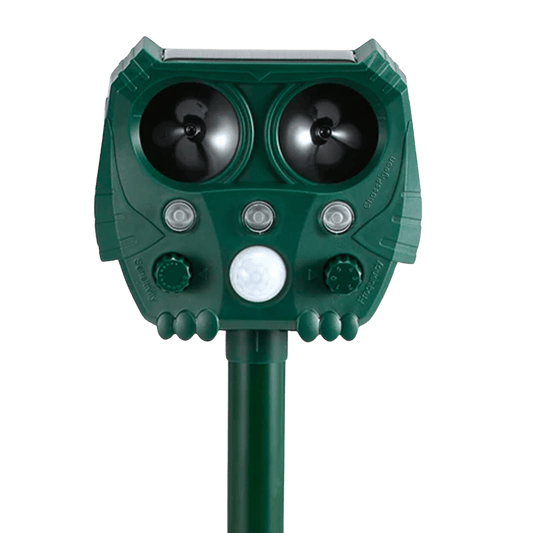


If you already know roughly what these gadgets are and how the technology works, and you mainly want to know whether they deliver, this review brings together three things that rarely sit side by side: the actual science, what pest control professionals advise, and what real buyers report.
Not all ultrasonic devices are built the same. See what sets PigeonChaser apart.
What the Science Says About Ultrasonic Pigeon Repellents
Understanding the actual evidence is essential before deciding whether these devices are worth using. The honest picture is mixed, and being clear about it is what separates a trustworthy review from marketing.
How pigeons hear
Pigeons are most sensitive to low and mid frequencies, peaking around 1 to 5 kHz, with an upper limit that falls below the ultrasonic range. This is the central reason researchers are cautious about ultrasound-only devices: a large share of the sound these units produce may simply fall outside what pigeons can hear well.
What field studies have found
Controlled tests of ultrasound-only devices have generally not shown a reliable deterrent effect on feral pigeons. In a trial run inside a vacant building, Woronecki (1988) compared ultrasonic, visual, and sonic units and found the ultrasonic device completely ineffective: pigeon activity did not change across a 20-day treatment, and the birds kept nesting and roosting close to the operating unit rather than avoiding the zones where the ultrasonic field was strongest. Jenni-Eiermann, Heynen, and Schaub (2014), writing in the Journal of Pest Science, went further and tracked both behaviour and the stress hormone corticosterone, reporting no change in caged pigeons and no deterring effect on free-ranging birds. A broader review by Bomford and O'Brien (1990) reached the same verdict across species, finding no reliable evidence that ultrasound alters bird behaviour. That review is cited in national wildlife and airport bird-control guidance, which is one reason ultrasound on its own is not recommended as a standalone fix for birds.
Studies cited above
- Woronecki, P. P. (1988). Effect of ultrasonic, visual, and sonic devices on pigeon numbers in a vacant building. Proceedings of the Vertebrate Pest Conference, 13, 266–272.
- Jenni-Eiermann, S., Heynen, D., & Schaub, M. (2014). Effect of an ultrasonic device on the behaviour and the stress hormone corticosterone in feral pigeons. Journal of Pest Science, 87(2), 315–322.
- Bomford, M., & O'Brien, P. H. (1990). Sonic deterrents in animal damage control: a review of device tests and effectiveness. Wildlife Society Bulletin, 18(4), 411–422.
Where deterrence tends to improve
Research on feral pigeon behaviour indicates that pigeons can take two to four weeks to change established habits, and that combining stimuli, such as sound with visual cues, alongside continuous operation, produces better long-term results than any single method used alone. This matters for device choice: units that pair ultrasound with audible-range sound, LED flashes, and variable patterns align more closely with what the limited evidence actually supports than fixed-frequency ultrasound does.
What Pest Control Professionals Say
Ask a pest control professional about ultrasonic bird units and the answer tends to be measured rather than enthusiastic. The prevailing view across the trade is that sound alone rarely solves a pigeon problem, though few operators dismiss these units outright: they place them as a supporting layer within an integrated plan rather than the centrepiece.
A handful of themes come up again and again:
- Barriers do the heavy lifting. For established roosting or nesting, professionals reach for exclusion first, using netting to seal off ledges and voids and bird spikes or wire to strip out comfortable perches. Physically denying access is why these methods form the backbone of most commercial jobs.
- Ultrasonic units are a component, not the cure. Operators who use them treat them as one part of a wider programme, usually alongside visual scarers and sanitation.
- Sanitation shifts the odds. Clearing droppings, feathers, and nesting material strips out the cues that pull birds back, and many pros treat this step as non-negotiable before any deterrent gets a fair trial.
- Expectations need managing. Because pigeons are strongly loyal to a site, professionals caution that any deterrent needs time and consistency, and that habituation is a real risk with fixed, unchanging output.

What Most Users Say About Ultrasonic Pigeon Repellents
Look across owner reviews and a recognizable pattern emerges, with genuine praise on certain points and equal disappointment on others. Outcomes differ sharply from one situation to the next, which may be the most telling signal in the whole picture.
What owners tend to appreciate
- It is humane and chemical-free, often the main reason people pick it in the first place
- The output stays inaudible to most people, so it does not intrude on daily life
- Setup is fast on balconies, ledges, and rooftops
- Upkeep is light, and running costs stay low
- The unit is discreet and disappears into the space
- Several owners report their best outcomes when they run it alongside other deterrents rather than solo
What owners tend to complain about
- Plenty report little or no change from sound alone, especially with fixed-frequency units
- Sound will not pass through walls, glass, or furniture, so shaded corners stay occupied
- Wind, distance, and open ground noticeably blunt the effect
- Getting the placement right takes some trial and error
- Some describe pigeons growing used to the device after a while
- For a serious, established infestation, most agree a single unit is not enough
Tips on Getting the Most Out of Ultrasonic Pigeon Deterrents, From User Experience

The owners who report the strongest results tend to share a few habits, and their experience lines up closely with what the research suggests:
- Mount the unit at pigeon height so the output reaches the spots where birds actually land and roost
- Keep the front of the device clear, since walls, plants, and furniture soak up or block the sound
- Run more than one unit for large or awkward layouts, covering ledges, corners, and blind spots
- Switch on variable frequencies where the model offers them, since shifting patterns slow adaptation
- Clean the area first and keep it clean, clearing droppings, feathers, and nesting scraps
- Add a second deterrent, such as reflective objects or a visual scarer, for reinforcement
- Make sure solar models catch real sun so they stay charged
- Wipe sensors and panels now and then so performance holds steady
PigeonChaser and ZeroBird: Our Two Ultrasonic Pigeon Deterrents Reviewed
The research runs one way throughout this guide: pigeons are harder to move with a single, unchanging signal than with a device that combines stimuli and varies its output. We kept that in mind while reviewing the two units below. Both are built for the same job but aimed at different situations: the PigeonChaser at smaller, contained spots and the ZeroBird at larger or more persistent ones.
1. PigeonChaser, Advanced Ultrasonic and Flash Pigeon Deterrent
The PigeonChaser works on two fronts at once, pairing bright LED flashes with adapted ultrasound to make balconies, gardens, and rooftops uncomfortable for pigeons. A motion sensor, a rugged waterproof shell, and a self-sufficient power setup round it out, making it a low-profile pick for anyone keen to skip nets and chemicals.
What you get
- Dual-action deterrent: bright LED flashes serve as the primary visual deterrent, aimed at the pigeon's natural escape response, with an adapted ultrasonic layer for added discomfort
- Motion activation: a PIR infrared sensor fires the device only when a bird comes within range, which conserves power and helps hold off habituation
- Selectable modes: ultrasound only, flashes only, or the recommended variable frequency plus flashes mode that keeps shifting the output to slow adaptation
- Coverage: roughly a 20 to 25 ft reach across a 90 degree angle, sized for balconies, window ledges, patios, and garden edges
- Weatherproofing (IP64): UV-resistant ABS made to shrug off rain, sun, and dust through the seasons
- Power: solar charging and USB top-up for continuous running, plus a battery option that lasts up to 6 months
- Mounting: ground stake and wall hook for soil, fences, or vertical surfaces
Performance ratings
- Ease of installation: 9/10
- Build quality: 8.5/10
- Value for money: 9/10
- Effectiveness (user-reported): 8.5/10
2. ZeroBird, Professional Multi-Action Bird Deterrent
For bigger areas or stubborn repeat visits, the ZeroBird runs a multi-action design that blends ultrasound, LED flashes, and shifting frequencies. That layered approach sits closer to what the research rewards than sound alone, since it brings in a visual element and keeps varying its output to make habituation harder.
What you get
- Adjustable frequency output: tuned for pigeons and other common pest birds
- Triple deterrent: high-frequency pulses, red and white LED flashes, and variable frequencies to slow habituation
- Wide coverage: up to 25 feet across a 110-degree detection angle, sized for rooftops, terraces, driveways, and garden perimeters
- Weatherproofing (IP45): reinforced ABS that stands up to rain, wind, dust, and sun
- Solar autonomy: a large panel plus USB recharge for continuous use, cloudy spells included
- Mounting: ground stake plus a built-in wall-mount slot
Performance ratings
- Ease of installation: 9/10
- Build quality: 9/10
- Value for money: 8.8/10
- Effectiveness (user-reported): 8.5/10
Final Verdict on the Efficacy of Ultrasonic Pigeon Deterrents
➡️ Ultrasonic pigeon deterrents are not a magic switch. The evidence for sound alone is thin, and pigeons often adapt, so treat any single unit as one layer rather than a cure. They earn their place on smaller balconies, ledges, and patios, especially multi-action models that add light and shifting frequencies. For heavy or open-area infestations, pair them with physical barriers or visual scarers. Set realistic expectations, place them well, combine methods, and they can make a real difference.
Other Methods to Pair With Ultrasonic Deterrents for Better Results
An ultrasonic unit performs best as one instrument in an ensemble. Layering it with methods that target different senses makes a spot harder for pigeons to settle into and harder to get used to.
Natural repellents

Scents and textures pigeons dislike, such as peppermint oil, citronella, chili powder, or vinegar sprays, suit small areas and early visits. They need frequent reapplication outdoors, so they work well as a cheap first layer near windows and ledges.
Reflective scarers
A flash of light or a sudden movement is enough to confuse pigeons. Reflective tape, old CDs or spinning mirrors do the trick, but a wind-powered bird deterrent makes those flashes truly unpredictable: its mirrored surfaces spin in the wind and reflect light in every direction. Place it around balconies, gardens and roof edges, in a sunny and windy spot, and move it around from time to time so the pigeons don’t get used to it.
Gel and scent-based repellents

Sticky gels leave perches unpleasant to land on, which fits narrow runs like sills and beams. They reinforce a sound or visual deterrent well and need topping up with the weather.
Physical barriers
Spikes and netting simply stop birds from landing and nesting, and they are the longest-lasting option. Anti-pigeon spikes, made of stainless steel or plastic, have blunt tips that keep birds from landing without hurting them. They are easy to attach to window ledges, gutters or railings. Bird netting, on the other hand, is used to close off a balcony or a larger area.
Predator decoys

A lifelike owl or hawk can make a spot feel unsafe, at least for a while. SilentOwl from Sonic barrier is one good example, a realistic owl decoy meant to play on that instinct. The catch is that pigeons learn fast, so relocating it every few days helps keep the illusion working longer.
Motion-activated deterrents
A sudden spray of water or flash of light where birds gather breaks their routine. Motion-activated water repellents work on this principle: an infrared sensor detects pigeons and triggers a short spray as soon as they approach. Connected to a regular garden hose, they are especially useful in places where pigeons often return or flock together, like a yard, a patio or a vegetable garden. The birds never know when the spray will go off, which makes the device more of a deterrent than a simple object sitting in the garden.
Comparison Table: Ultrasonic vs. Other Methods
Here is how ultrasonic units and the methods above compare at a glance, so you can see which ones are worth layering together for your space rather than treating any single one as the whole answer.
|
Method |
Effectiveness |
Maintenance |
Safety |
Durability |
Main drawbacks |
Best use case |
|
Ultrasonic deterrents |
Mixed; stronger in combination than alone |
Low (occasional cleaning) |
Regarded as safe; no chemicals |
Good (many models weatherproof) |
Thin evidence for sound alone; placement-sensitive |
Balconies, ledges, smaller rooftops, as one layer |
|
Natural repellents (scents, gels) |
Moderate for light problems |
High (frequent reapplication) |
Generally safe for people and pets |
Poor to moderate (weather-sensitive) |
Constant upkeep; shaky against stubborn roosting |
Small surfaces, early visits |
|
Reflective deterrents (tape) |
Moderate where there is movement |
Low to moderate |
Safe |
Moderate (materials fade) |
Hinges on wind and light; can turn predictable |
Gardens, window ledges, patios |
|
Physical barriers (spikes, netting) |
High when fitted well |
Moderate (occasional checks) |
Safe when installed correctly |
Very good |
Setup effort and cost; can affect looks |
Roof edges, beams, deep roosting spots |
|
Predator decoys ( statues) |
Short-term help; variable over time |
Low (reposition now and then) |
Safe |
Moderate |
Birds adapt if the decoy stays put |
Gardens, patios where visual cues help |
|
Motion-activated |
High in active intrusion zones |
Moderate (check sensors, power) |
Safe (non-chemical) |
Good |
Higher cost; may need power or water |
Driveways, entryways, larger outdoor zones |
Want to mix a few of these into one defense? See our full bird deterrent collection.
FAQ
Is it worth buying an ultrasonic pigeon deterrent?
It depends on how serious the problem is. For a handful of birds landing on a balcony or ledge, and where you would rather not see spikes, an ultrasonic unit is a reasonable, discreet, low-maintenance thing to try, ideally as part of a wider setup with cleaning and a second deterrent. For a heavy, entrenched infestation, or a warehouse or wide rooftop, a physical barrier such as bird spikes or netting is the more dependable spend from the outset.
PigeonChaser or ZeroBird: which ultrasonic pigeon deterrent should you pick?
Match the unit to the site. Both are dual-action, pairing LED flashes with ultrasound, so the choice comes down mostly to coverage and conditions. The PigeonChaser, with a 90-degree angle and a higher IP64 weather rating, suits smaller, contained spots like a single balcony, patio, or garden corner. The ZeroBird, with a wider 110-degree detection angle, earns its place on larger or higher-traffic areas, and where birds keep coming back.
How soon should an ultrasonic pigeon deterrent start to make a difference?
Results vary. Where a device does help, the shift is usually gradual rather than instant, often across one to several weeks, because pigeons are territorial and slow to give up familiar spots. Steady operation, correct placement, a clean area, and a second deterrent all improve the odds. If nothing has budged after a few weeks, sound alone is unlikely to be enough for your situation.
Can an ultrasonic pigeon deterrent run continuously, day and night?
Yes. These units are built for non-stop operation and draw very little power, and solar or USB-rechargeable models hold their charge over the long run. A constant presence generally beats sporadic use, since it gives pigeons a steadier reason to relocate. Just keep the solar panel clean and charged so the unit does not quietly stop working.
Will an ultrasonic pigeon deterrent work on birds other than pigeons?
It may affect species with similar hearing, such as doves, starlings, and sparrows, but sensitivity differs, and nothing is guaranteed for any bird. As with pigeons, the case for sound alone is mixed, and models that add visual deterrence and variable frequencies tend to hold up better across a mixed bird population than fixed-frequency, sound-only units.
Does an ultrasonic pigeon deterrent still work across large, open spaces?
Performance usually falls off in very open areas, where sound scatters fast and no surfaces contain it. Big gardens, exposed rooftops, and wide yards often call for several units, broader detection angles, or added visual deterrents to make any real dent. In those settings, physical barriers or motion-activated devices are frequently the safer bet than ultrasound.